L-Shaped Tube Step Beam Roll Forming Machine for Metal Pallet Racks
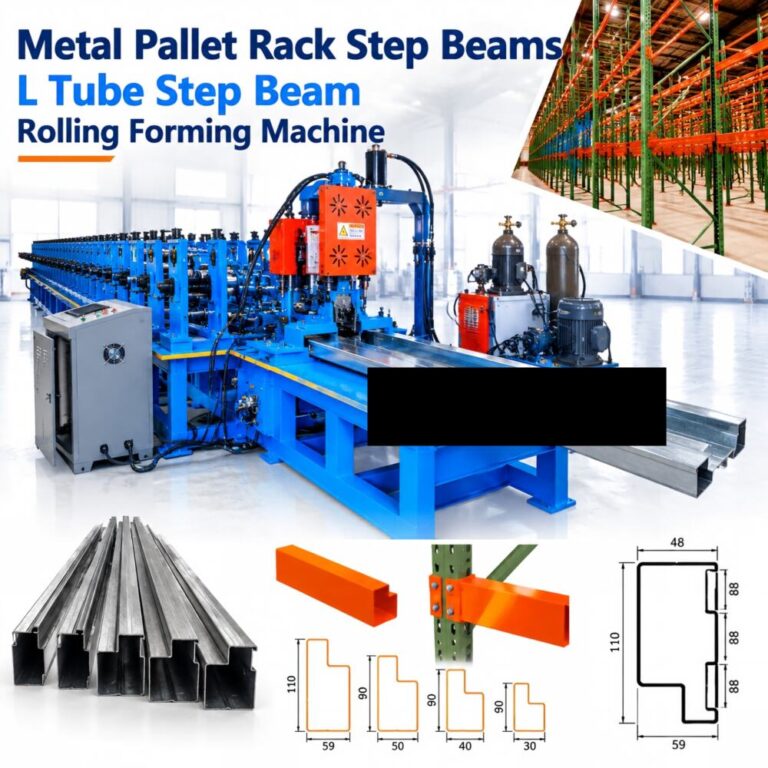
What the Machine Is—and Why It Matters
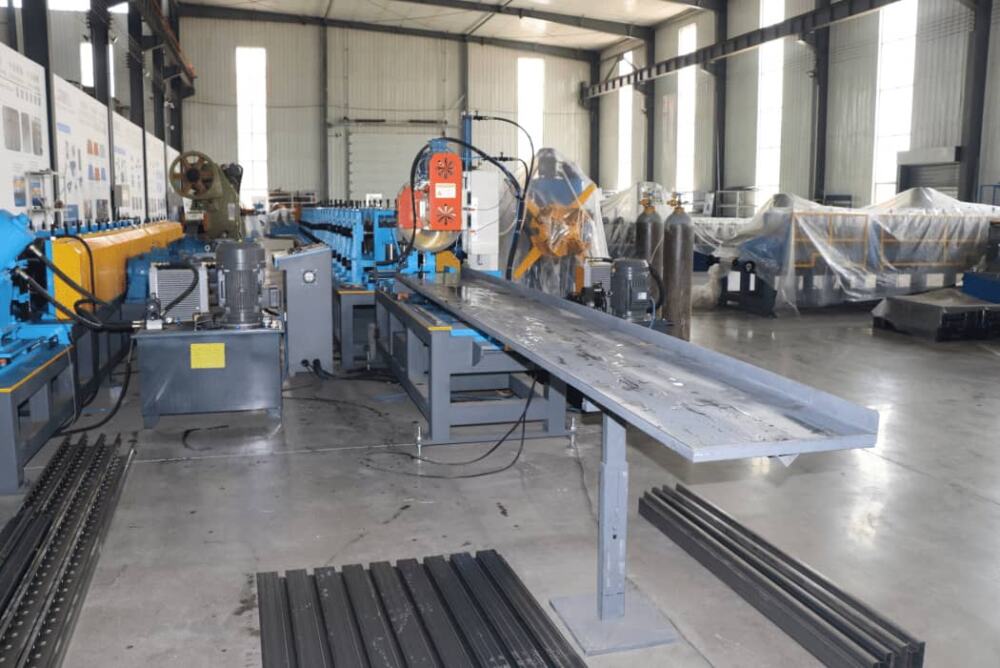
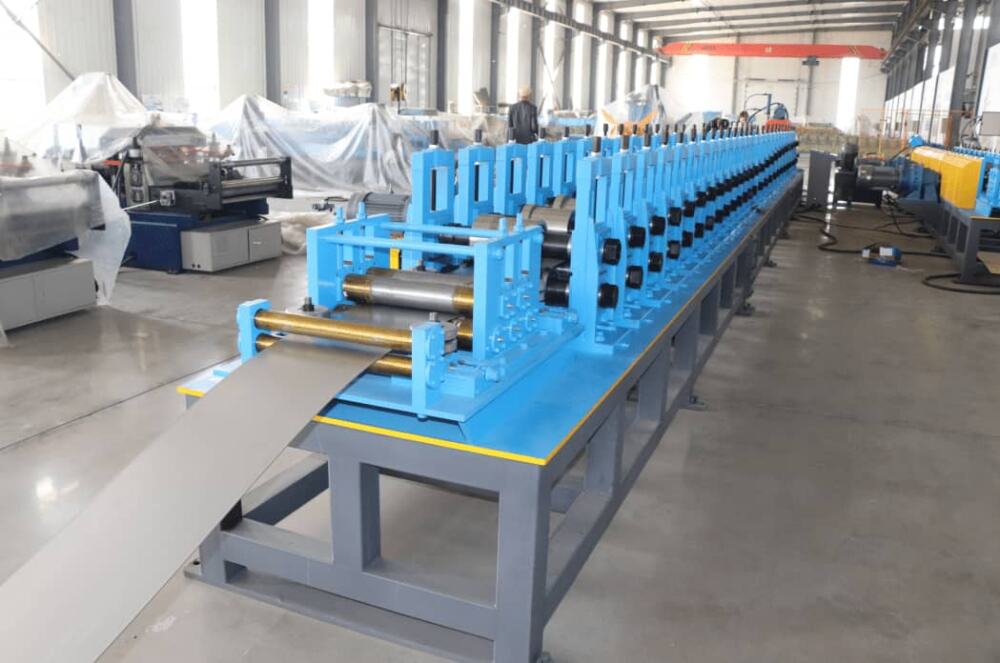
An L-shaped tube step beam roll forming machine is a specialized cold roll forming system that transforms flat steel coil into step-profile beams—also called P-beams—through a continuous sequence of decoiling, leveling, pre-punching, progressive roll forming, seam welding, and precision cutting. The “step” in the profile is not a cosmetic detail. It increases the moment of inertia of the beam cross-section, allowing the finished beam to carry heavier pallet loads without adding material thickness—a direct lever for both load rating and material cost. The L-shaped tube configuration further provides a closed structural form that resists twisting and deflection under load, while the flat step surface accommodates wire decking and shelf panels securely.
The machine’s job is to hold that geometry stable across thousands of meters of production. A 0.5 mm deviation in box width or step height is enough to cause poor connector fit, weakened welds, or field assembly failures. That is why the specification sheet matters, and why the engineering behind the rollers, the welding unit, and the control system is the real differentiator.
Product Attributes :
|
1.Formed Material
|
GI, cold rolled coil
|
Thickness:2.5mm
|
||
|
2.Decoiler
|
Hydraulic automatic decoiler
|
Manual decoiler(will give you as free)
|
||
|
3.Main body
|
Roller station
|
28 rows(As your requirement)
|
||
|
Diameter of shaft
|
90mm solid shaft
|
|||
|
Material of rollers
|
GCR15
|
|||
|
Machine body frame
|
Metal steel welded
|
|||
|
Drive
|
chain transmission
|
|||
|
Dimension(L*W*H)
|
5500*800*1200(customize)
|
|||
|
Weight
|
About 15.5T
|
|||
|
4.Cutter
|
Automatic
|
cr12mov material, no scratches, no deformation
|
||
|
5.Power
|
Motor Power
|
11KW*2 sets
|
||
|
Hydraulic system power
|
5.5KW
|
|||
|
6.Voltage
|
380V 50Hz 3Phase
|
As your requirement
|
||
|
7.Control system
|
Electric Box
|
Customized(famous brand)
|
||
|
Language
|
English(Support multiple languages)
|
|||
|
PLC
|
Automatic production of the whole machine. Can set batch, length, quantity, etc.
|
|||
|
8.Forming Speed
|
0-20m/min(customized)
|
The speed depends on the shape of the tile and the thickness of the material.
|
||
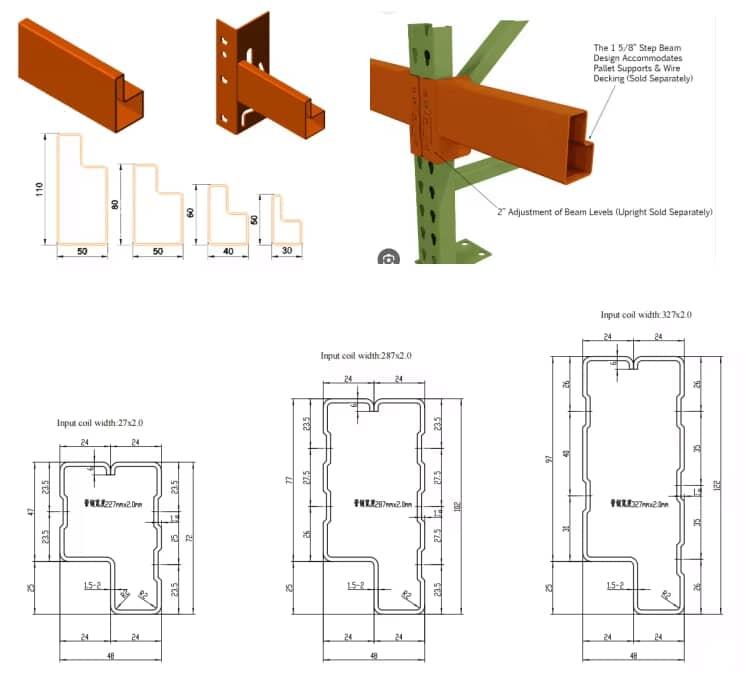
Pattern diagram:
Core Features That Define Production Capability
1.Integrated precision punching before forming. The machine punches connection holes—teardrop, slotted, or custom patterns—before the strip enters the forming mill. This pre-punching approach eliminates the accumulated error and stress concentration associated with post-forming punching, ensuring hole spacing and diameter remain consistent from the first meter to the last.
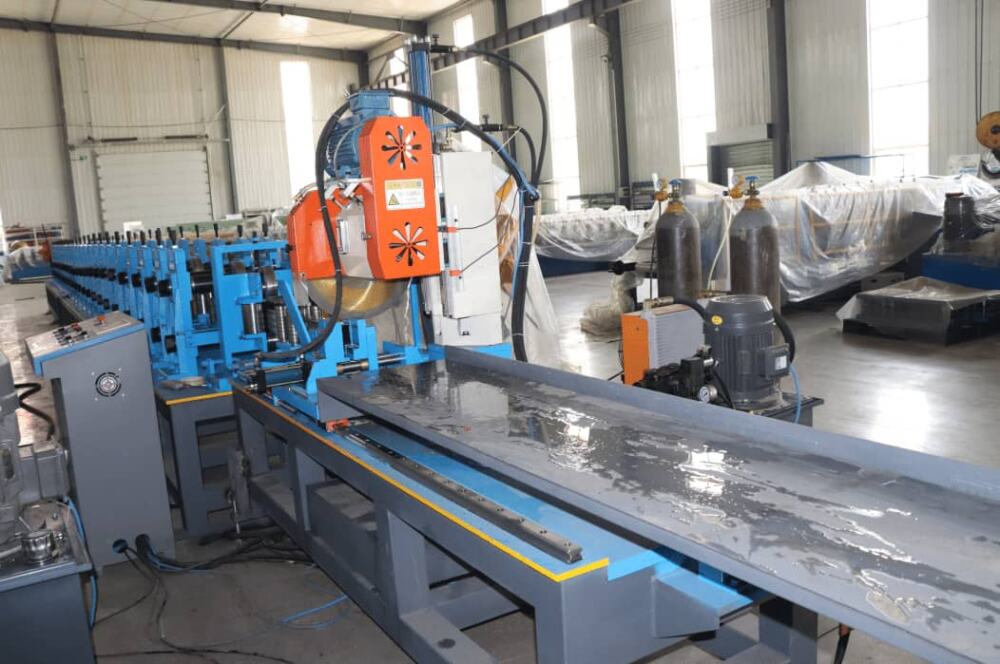
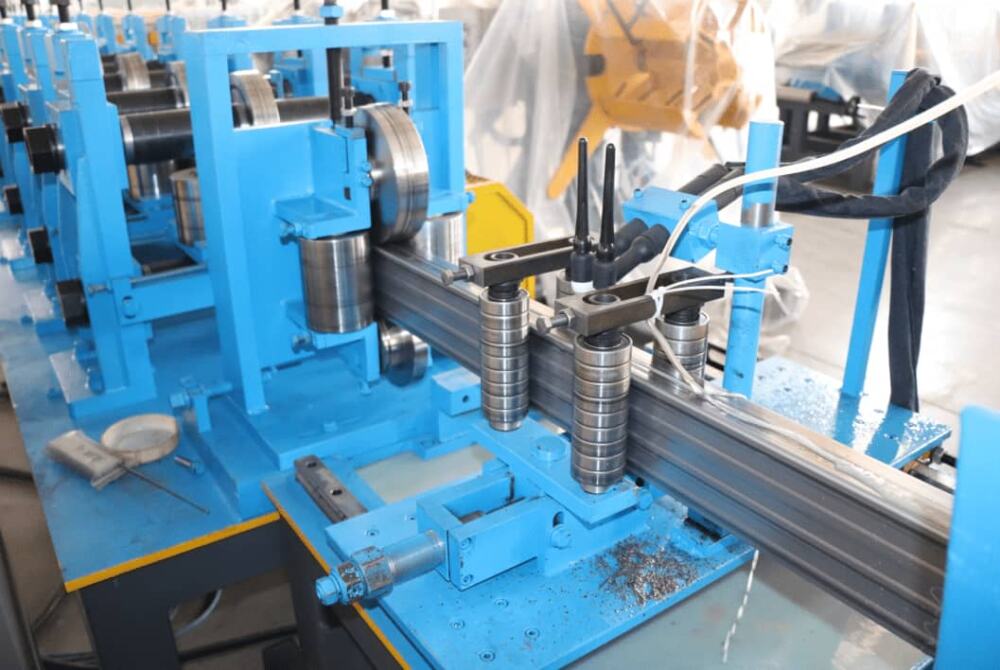
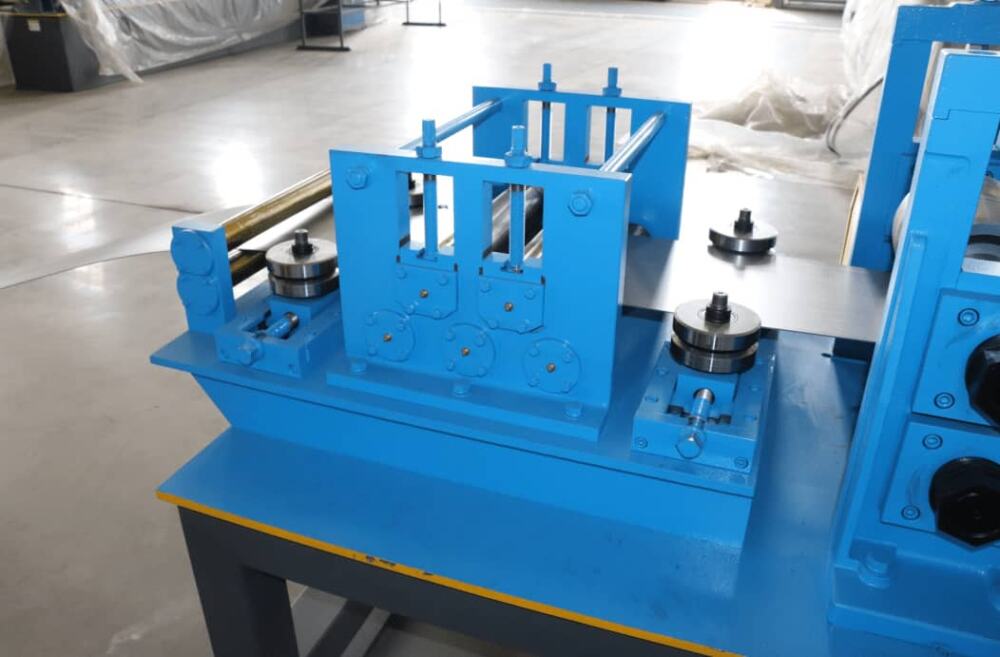
2.Progressive multi-station forming with tight tolerances. Depending on profile complexity, the line uses 16 to 28 forming stations, with rollers manufactured from GCr15 or Cr12MoV hardened steel (HRC 55–62) to manage spring-back and maintain dimensional stability at production speeds. Leading configurations hold profile tolerance to ±0.5 mm, a level of consistency that directly supports downstream connector welding and field interchangeability.
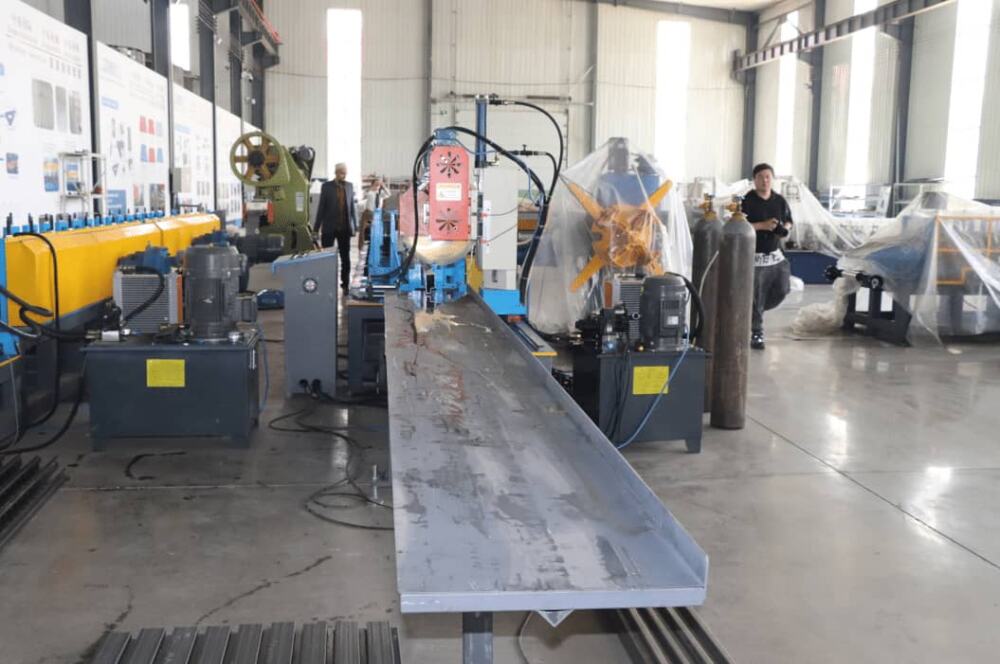
3.Integrated on-line welding for structural integrity. Rather than forming first and welding as a secondary offline operation, the machine performs seam welding—spot, high-frequency, or laser—in-line with the forming process. This single-pass approach delivers uniform weld quality, higher structural rigidity, and load-bearing capacity that meets RMI/ANSI MH16.1 or EN 15512 requirements, without the labor variability of manual welding.
Where the Machine Fits: Applications Across the Storage Economy
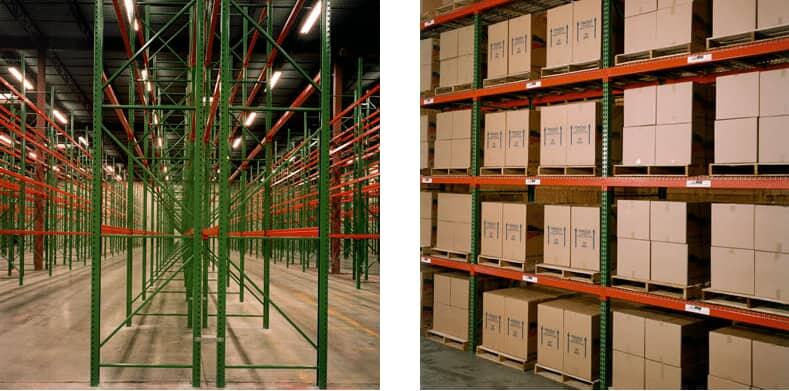
The beams produced on this line are the horizontal load-bearing members in selective pallet racking, the most widely deployed racking configuration in the world. Their applications extend across:
• Distribution and fulfillment centers, where interchangeable step beams allow rapid reconfiguration of rack levels as inventory profiles change.
• Cold chain and food-grade warehouses, where galvanized or powder-coated beams resist corrosion and meet hygiene requirements.
• Manufacturing and industrial storage, including heavy-duty shelving, long-span racking, and mezzanine floor structures.
• Retail and supermarket display systems, where lighter-gauge step beams support merchandising flexibility.
• Automation-ready and high-bay warehouses, where beam dimensional consistency is a prerequisite for integration with shuttle systems, AGVs, and AS/RS equipment.
Frequently Asked Questions
Q: What is the difference between a step beam and a box beam, and does this machine produce both?
A step beam features a stepped cross-section that mechanically interlocks with rack uprights and provides a flat surface for decking; it is the dominant beam type in selective pallet racking. A box beam is a fully closed rectangular profile, often used in standard shelving and some heavy-duty applications. The L-shaped tube step beam machine is optimized for step/P-beam profiles. While some lines can be configured for related profiles, the roller tooling and welding strategy are typically dedicated to the step geometry to maintain tolerance and speed.
Q: What material thicknesses and yield strengths can the machine handle?
Typical standard configurations cover 1.5–2.5 mm cold-rolled steel, galvanized steel, or carbon steel, with yield strengths in the 250–350 MPa range. Heavy-duty and customized versions extend to 3.0 mm or higher, and higher-strength steels can be accommodated with adjusted roller design and drive capacity. The appropriate specification depends on the target load ratings and the regional racking standards the finished beams must satisfy.
Q: Can the machine be customized for a specific beam profile or regional standard?
Yes. Roller tooling is designed from the customer’s profile drawing or from the target racking standard (e.g., teardrop for North America, slotted for European EN configurations). Beam height, width, step geometry, hole pattern, and welding method are all specified at the design stage. Customization extends to voltage, control language, and safety guarding to suit the destination market.
Conclusion: The Machine as a Strategic Asset
If you are evaluating a step beam production line, the conversation should begin not with a speed number but with the profile you need to hold, the standard you need to meet, and the volume you need to sustain. Those three inputs determine the roller design, the welding strategy, and the level of automation that will actually return value on your floor. Share your beam drawing and target output with our engineering team—we will come back with a line configuration built around your production reality, not a generic specification sheet.