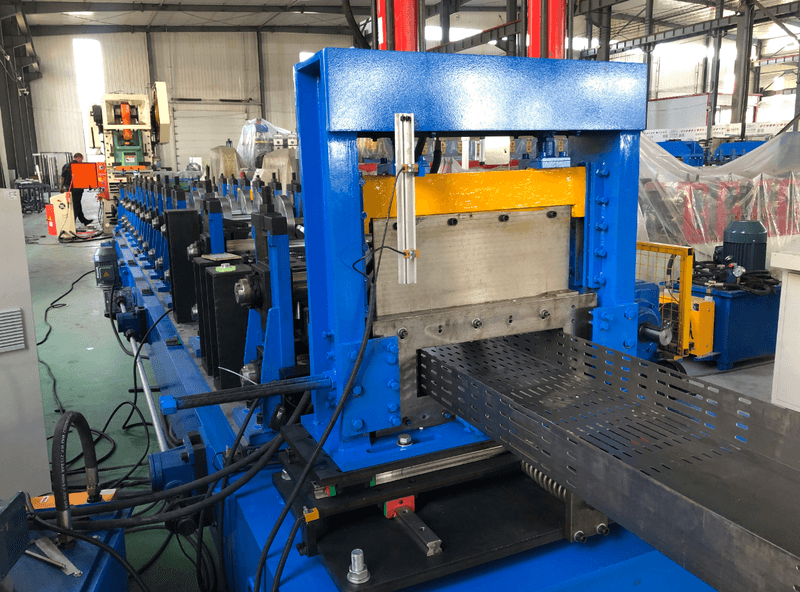
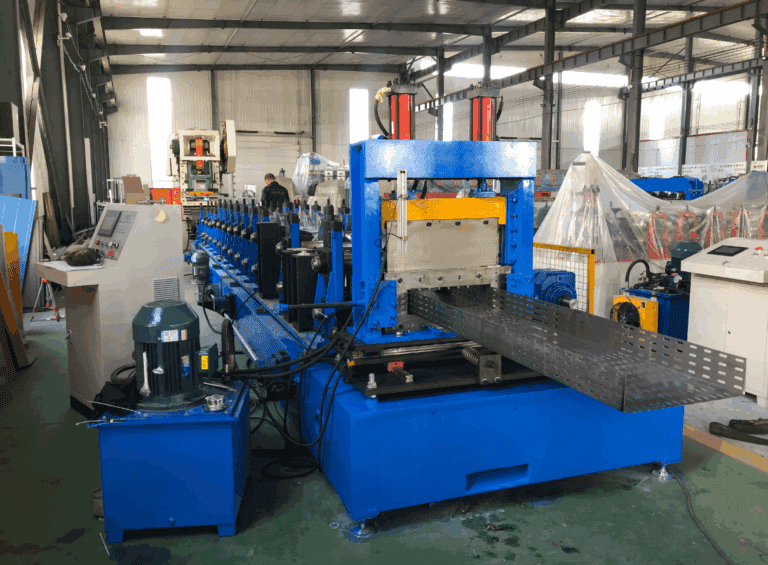
Steel Metal Cable Tray Cover Roll Forming Machine
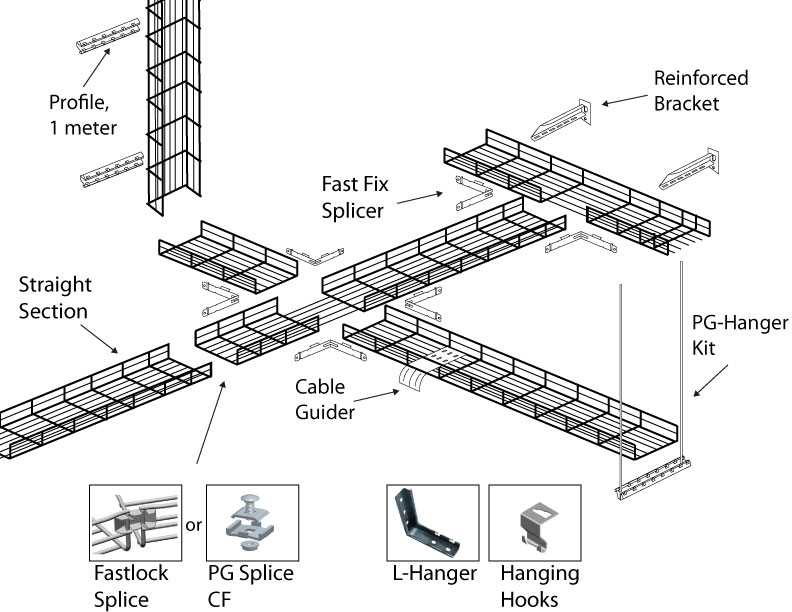
Applicable fields: covering the needs of multiple industries
- Power engineering:
laying high-voltage cables and control cables for substations and power plants, suitable for large-span and high load-bearing bridge requirements. - Communication and Data Center:
Network cables and fiber optic cables for data rooms and communication base stations can be laid, and enclosed trough type cable trays can be produced to prevent dust and water. - Construction engineering:
laying of strong and weak electrical cables for commercial complexes, office buildings, and residential buildings, providing lightweight and aesthetically pleasing aluminum alloy or spray painted cable trays. - Industrial manufacturing:
The installation of power cables for equipment in automobile factories and chemical enterprises can produce oil resistant and corrosion-resistant stainless steel or anti-corrosion cable trays.
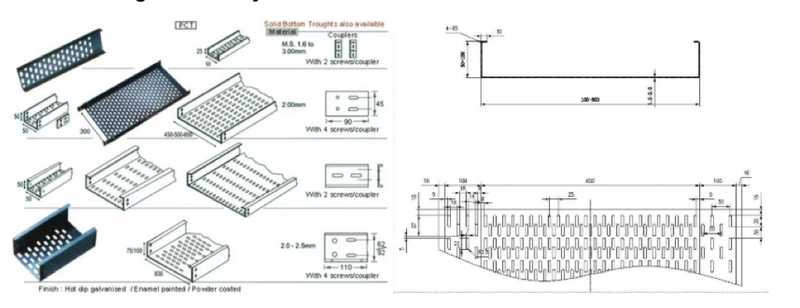
Pattern diagram:
Product Attributes :
|
1.Formed Material
|
GI
|
Thickness:0.7-2.0 mm Width: as request
|
||
|
2.Decoiler
|
Hydraulic automatic decoiler
|
Manual decoiler(will give you as free)
|
||
|
3.Main body
|
Roller station
|
33 rows(As your requirement)
|
||
|
Diameter of shaft
|
90mm solid shaft
|
|||
|
Material of rollers
|
45# steel, hard chrome plated on the surface
|
|||
|
Machine body frame
|
500 H steel
|
|||
|
Drive
|
Gearbox transmission
|
|||
|
Dimension(L*W*H)
|
15000*1800*1600(customize)
|
|||
|
Weight
|
15T
|
|||
|
4.Cutter
|
Automatic
|
cr12mov material, no scratches, no deformation
|
||
|
5.Power
|
Motor Power
|
11KW*2 sets,Siemens brand
|
||
|
Hydraulic system power
|
7.5KW
|
|||
|
6.Voltage
|
380V 50Hz 3Phase
|
As your requirement
|
||
|
7.Control system
|
Electric Box
|
Customized(famous brand)
|
||
|
Language
|
English(Support multiple languages)
|
|||
|
PLC
|
Automatic production of the whole machine. Can set batch, length, quantity, etc.
|
|||
|
8.Forming Speed
|
15-20m/min
|
The speed depends on the shape of the tile and the thickness of the material.
|
||
Equipment definition and core workflow
Steel Metal Cable Tray Cover Roll Forming Machine is an automated production line that integrates "raw material processing - cold bending forming - precision processing - fixed length cutting - finished product collection". It mainly targets metal raw materials such as galvanized steel plates, stainless steel plates, and aluminum alloy plates. Through continuous and high-precision processing, it produces various types of cable trays such as trough, tray, and ladder. The core workflow can be divided into four major stages:
1. Raw material pretreatment: laying the foundation for processing
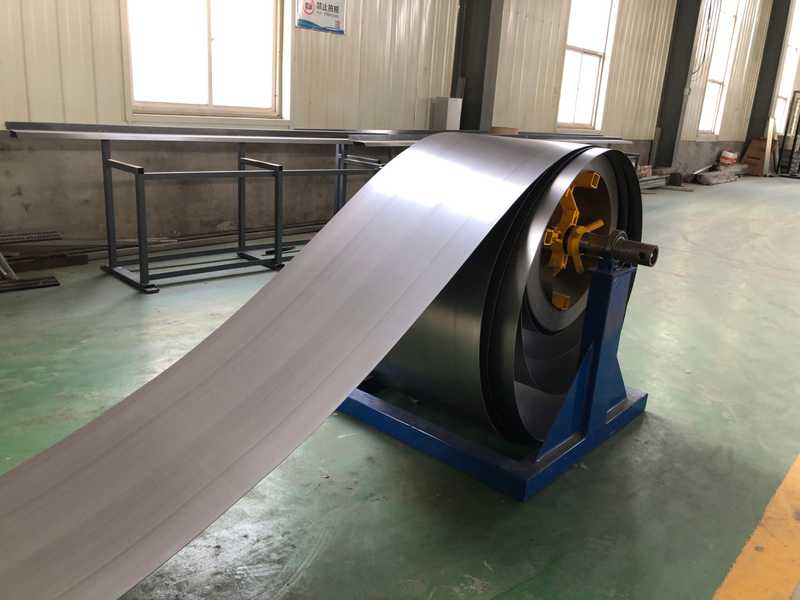
Uncoiling and leveling: The rolled metal raw materials (usually 0.8-2.5mm thick) are smoothly unrolled by a hydraulic unwinding machine, and then the internal stress of the raw materials is eliminated by a multi roll leveling mechanism to ensure the flatness of the sheet (flatness error ≤ 0.5mm/m), avoiding wrinkles or deformation during subsequent forming;
Automatic correction: Equipped with a photoelectric correction system, it can detect the direction of raw material transportation in real time. Once there is a deviation, it will automatically adjust to ensure that the raw material is always transported along the preset trajectory, providing a prerequisite for precise molding.
2. Cold bending forming: shaping the core structure of the bridge frame
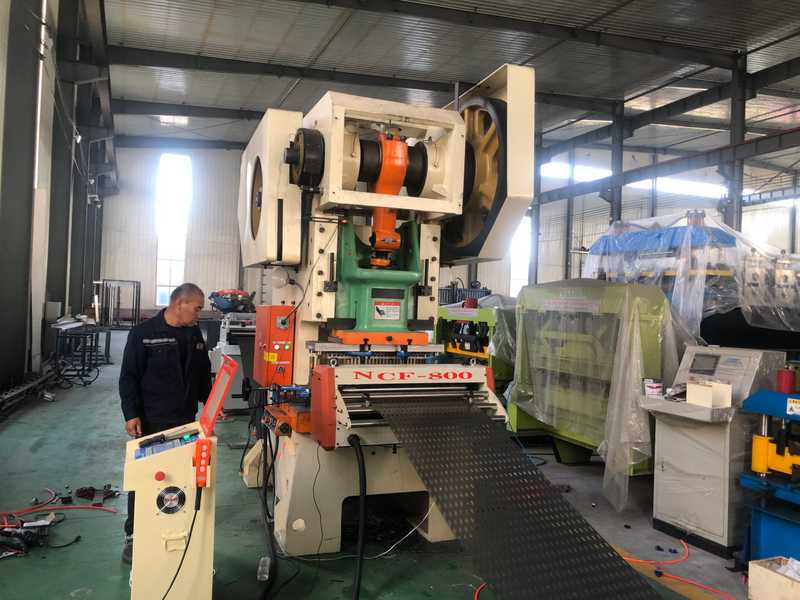
This is the core link of the equipment, and the pre processed metal sheet enters the forming unit composed of 15-25 sets of precision rolling molds (the number of molds is adjusted according to the specifications of the bridge). By precisely controlling the mold pressure and conveying speed through servo motors, the sheet metal gradually deforms from a flat plate to a predetermined cross-sectional shape of the bridge under continuous and gradual rolling action - whether it is the closed U-shaped structure of the trough bridge, the grid like structure of the tray bridge, or the ladder structure of the ladder bridge, all can be achieved through customized molds. During the molding process, the CNC system monitors the cross-sectional dimensions in real-time, dynamically adjusts parameters, and ensures molding accuracy.
3. Precision machining: meets installation requirements
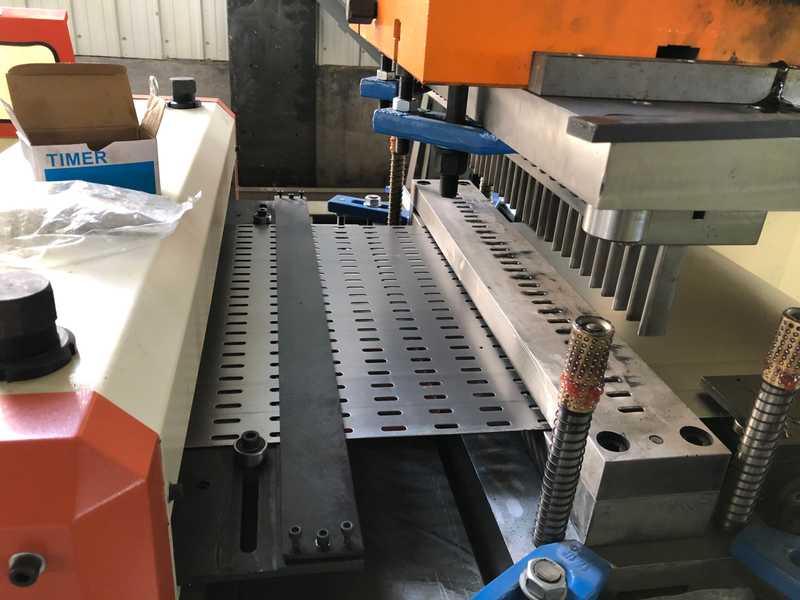
Punching processing: According to the connection and fixing requirements during bridge installation, the equipment uses a CNC punching mechanism to accurately process installation holes and cable threading holes on the side or bottom of the bridge. The punching diameter error is ≤± 0.05mm, and the hole spacing error is ≤± 0.1mm, ensuring that the hole positions are aligned during subsequent installation;
Strengthening and shaping: For cable trays that need to improve their load-bearing capacity, side flanges or bottom reinforcement ribs can be simultaneously pressed to enhance structural stability; It can also complete the cutting and beveled edge processing of the bridge end according to design requirements, adapting to different splicing scenarios.
4. Fixed length cutting and finished product collection
The formed and processed bridge profiles are precisely controlled in length by a servo feeding mechanism (cutting error ≤± 0.5mm), and are cut to a fixed length by a high-speed hydraulic cutting knife or saw blade. The cut finished products are transported to the collection station by conveyor belts, and some equipment is also equipped with automatic stacking mechanisms to achieve neat stacking of finished products, which facilitates subsequent packaging, storage, and transportation.